THE KIPPENBERGER CHALLENGE
|

| BOOKSHOP | CHALLENGERS | NEWS |
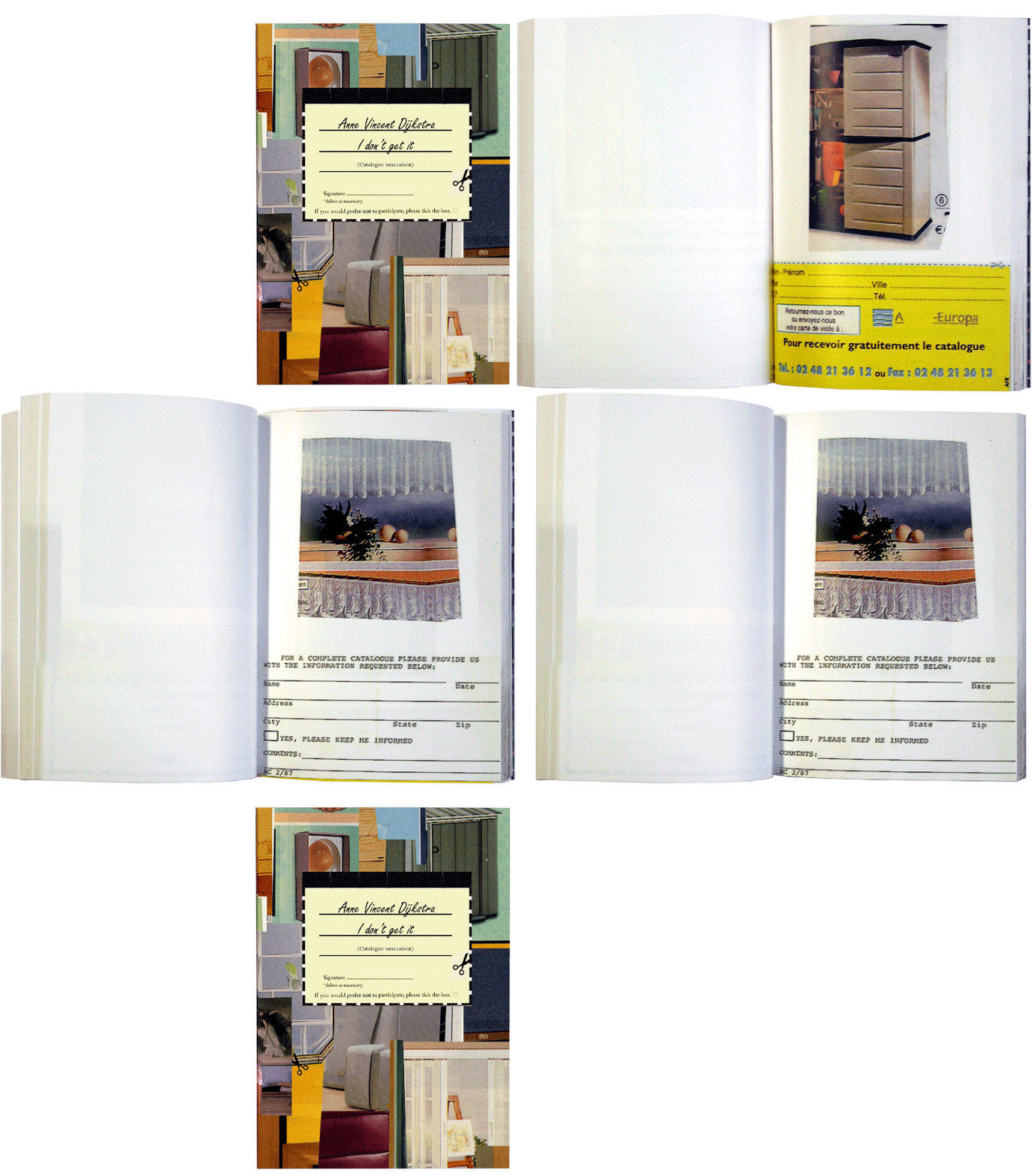
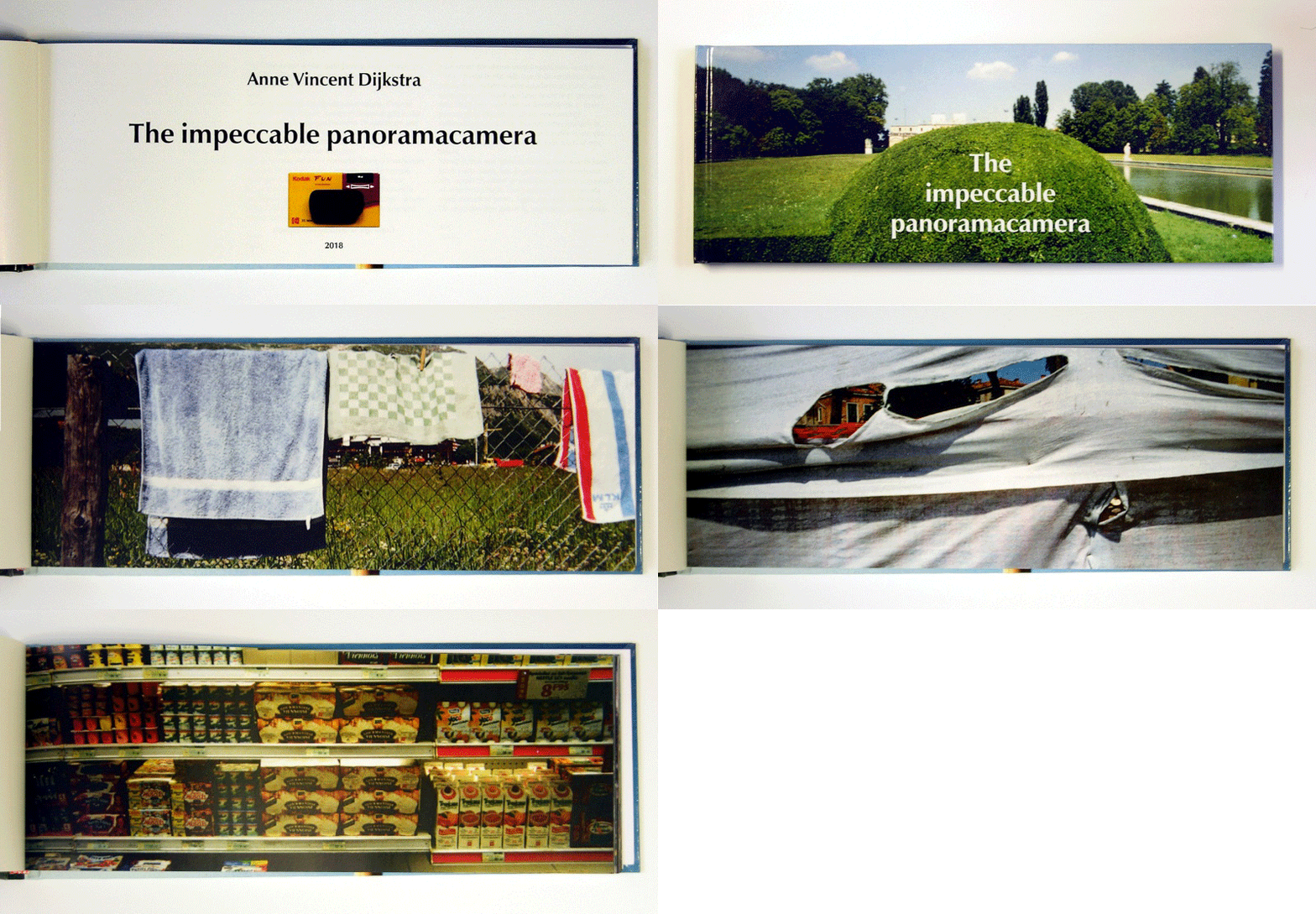
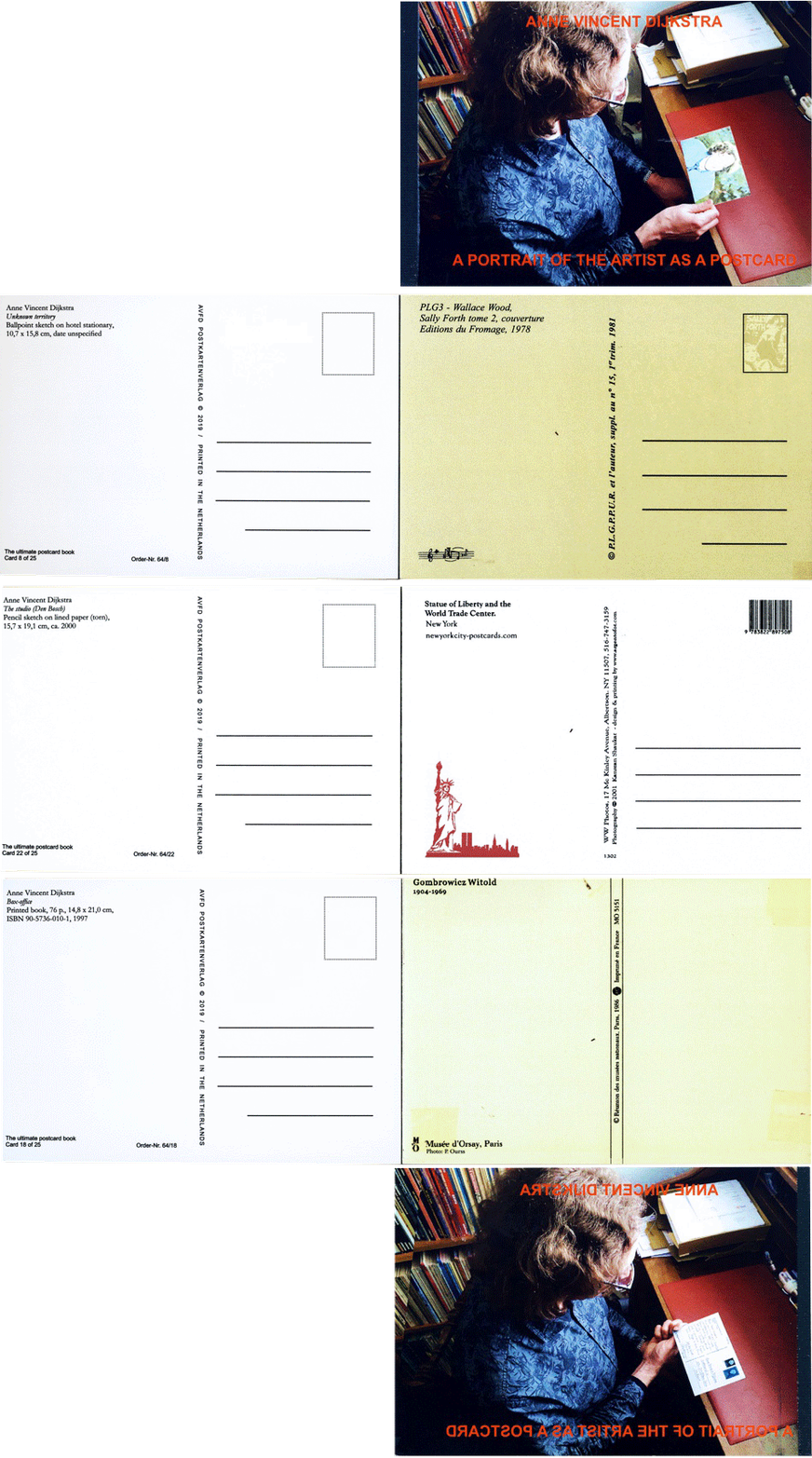
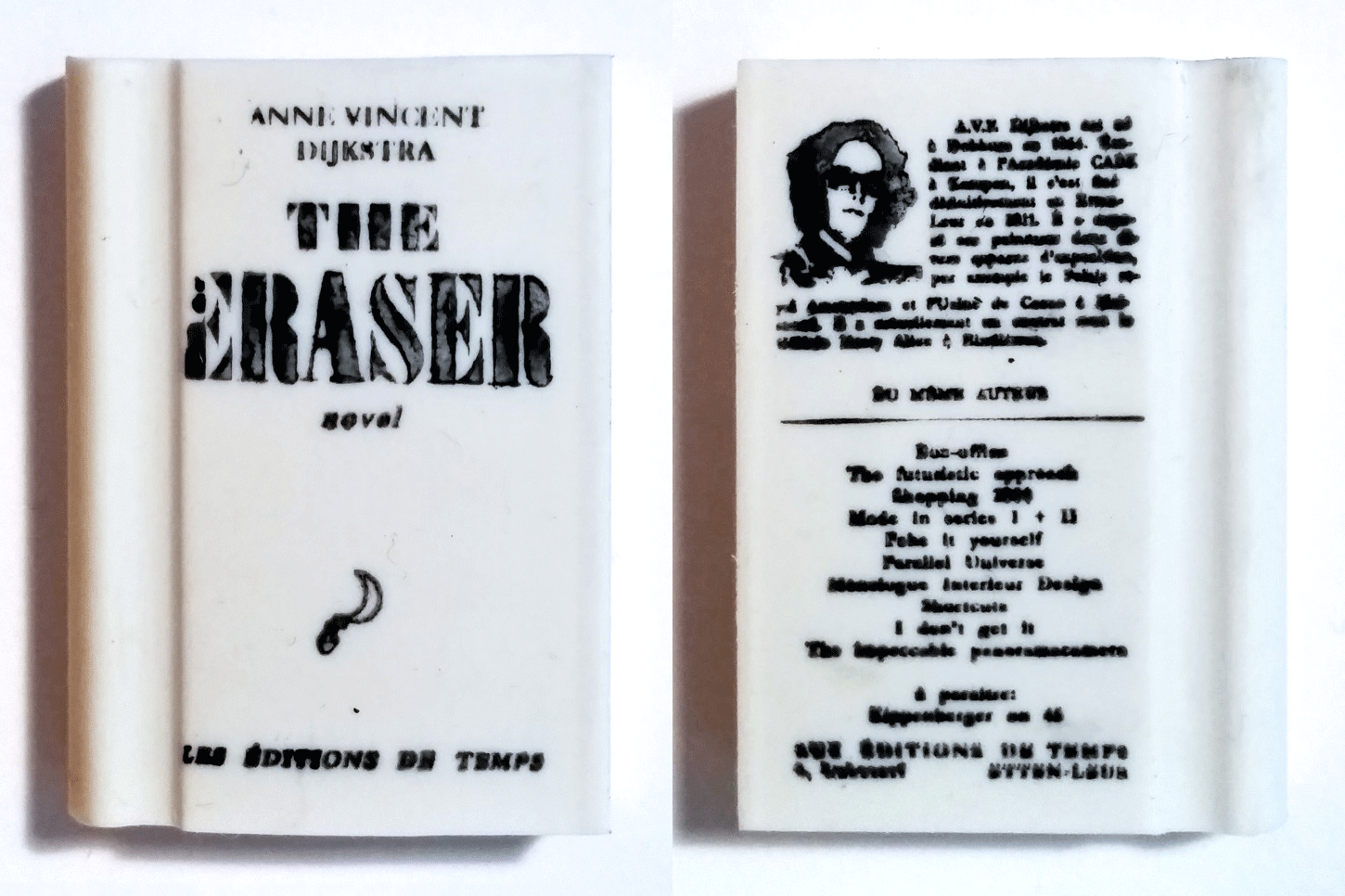
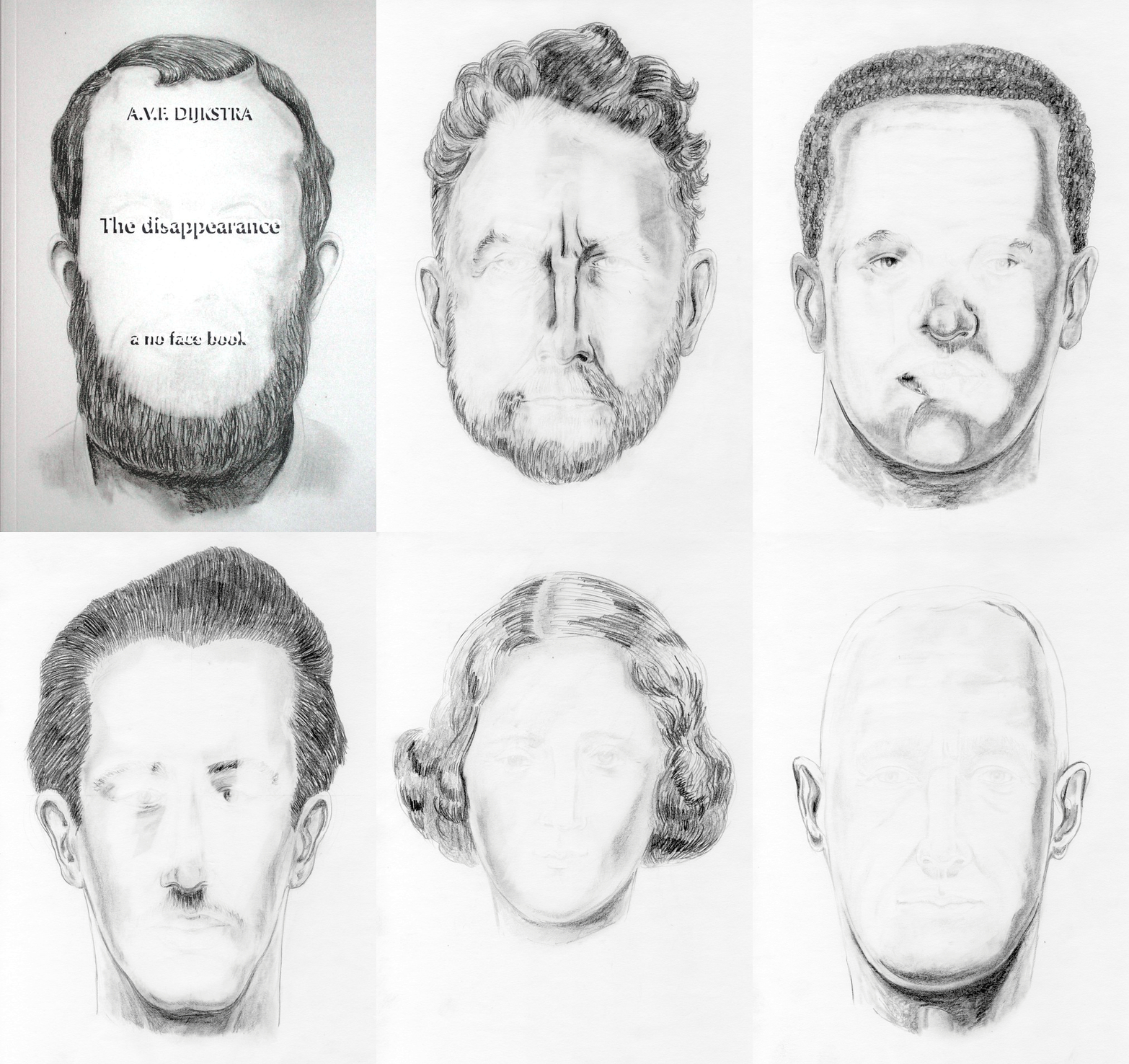
| Anne Vincent Dijkstra 1 Dec. 2018 – 1 Dec. 2019 1 I don't get it (Catalogue sans raison) ISBN: 978-90-805621-8-9 11.9 × 17.0 × 1.3 cm, 296 g, 204 pages This 'catalogue sans raison' is a sort of reverse catalogue raisonné and only raises questions instead of giving answers. Apparently the reader who 'does not get it' has to cut out the coupons and post them to acquire further information. The book questions the idea of meaning versus incomprehensibility, in which the 'solution' lies somewhere between complete meaninglessness and the idea that the viewer needs to know more or learn to come to understanding, as is so often the case in (modern) art. Published by Tick the Box in an edition of 60 2 The impeccable panoramacamera 10.7 × 28.2 × 1.1 cm, 293 g, 102 pages This self-published hard-cover book contains a selection of around 50 photos I took over the course of twenty years with a panoramic camera. The pictures challenge the notion of the interesting. In contrast to a regular camera, in the panoramic camera this notion lies solely in the format. So I decided to turn the panoramic camera against itself. To disturb its predetermined idea of 'beauty'. Edition of 50 copies. 3 A portrait of the artist as a postcard The ultimate postcard book 10.5 × 15.1 × 0.9 cm, 122 g, 50 pages ISBN: 978-90-805621-9-6 The book contains a selection of 25 postcards I collected over the years. Instead of showing the image on the front, it is the back with the text that is printed. In a condensed form they represent my life so far: places, travels, friends, art, influences etc. On the opposite side 'cards' of my own art works are shown, of which also only the backside is depicted. In this way the cards comment each other. Because only the back of the cards is shown it is up to the 'reader' to imagine the pictures described in the titles. These are the only postcards in which both front and back can be used to fill out the address of the receiver. Therefore I think this the ultimate postcard book. Published by PAVFD Postkartenverlag in an edition of 40 4 The eraser 4 × 2.9 × 1 cm, 17 g 'The eraser' is a book object; in this case a book that is shaped like an eraser. The design is based on that of 'Les éditions de minuit', a French publishing house that published books by writers such as Beckett, Sarraute and also by Alain Robbe-Grillet. His first novel was called 'Les gommes' (The erasers), and reads like a detective story but is primarily concerned with weaving and then probing a complete mixture of fact and fantasy. As 'The eraser' contains no pages, the result is the same as with a book that has only blank pages: no information is disclosed. But in this case not only doesn't the 'book' provide any information, it can also be used to destroy it. And if it is used as an eraser, the book itself will gradually disappear completely. Published by Les Éditions de Temps in an edition of 37 numbered copies. 5 Foxhole magazine, volume 5, The youth issue 14.9 × 21.1 × 0.4 cm, 121 g, 53 pages Foxhole magazine was founded by Mark Beechill and is published irregularly since 2015. My contribution to volume 5 is entitled "Monkey tie" and can be found on pages 30–31. Published by Less Than 500 Press. 6 Domesday book 19.5 × 27.4 × 0.7 cm, 453 g, 114 pages The Domesday book is an artist's book and consists of a collection of 54 collages made by Anne Vincent Dijkstra (*1964). It is an appropriation of a book by the same title* that was published in 1962 by Ed Fisher, an American caricaturist who focuses mainly on social and political issues. The collages made on the basis of the pages of the book work as a poetical approximation of the world around us. Associating freely is what shapes these collages, but never in a random way. Always there are hints of a meaning, triggered very often by the captions of the cartoons that are still visible and readable. In this mix of seeming disparate images new meaning arises and at the same time the compositions of the collages, the colours, the crude interventions with the scissors also reveal an artistic value. Realistic shapes in photos or magazine cut-outs are mingled with drawings and the printed images by Ed Fisher. Abstract shapes of the empty edges of pages are not only a reference to the abstraction of Mondrian and the Stijl but also emphasize the fact that our reality is embedded in an abstract landscape of thought and philosophy. Published by Unlimited Editions Ltd. in an edition of 120 7 The encyclopedia of lost knowledge Volume I to VII 3.4 × 5.2 × 7 cm, 201 g, 0 pages Just as in the case of "The eraser" "The encyclopedia of lost knowledge" is a book object. It consists of seven rectangular erasers that are blank except for a small print on the back of each that indicates them as Vol.I, II, III etcetra. They are contained in a book case, as if it was a regular encyclopedia. But as with "The eraser", the 'books' have no pages and contain no information. Anyone who hopes to gather lost knowledge from this encyclopedia will be disappointed. Rather these erasers might be held responsible for the loss of knowledge, as they are by their nature destined to destroy information not preserve it. Published by Les Éditions de Temps in an edition of 7 signed, dated and numbered copies. 0.45 The disappearance A no face book 14.8 × 21 × 0.9 cm, 173 g, 102 pages The disappearance contains 44 drawings and one photograph, so that 45 percent of the pages (not counting the title and copyright page) are printed and 55 percent are left blank. The drawings of various well and lesser known and some completely unknown people were executed years ago for another project. I used one of the book shaped erasers that I produced (see book number 4 – The eraser) to erase part of their faces. As the book progresses less and less details are visible leaving the last few faces completely blank. The thought behind this 'no face book' is that with climate change going on one wonders whether in the (near) future there will be any faces left at all. The phrase on the back of the book "Towards a no face world" is meant as a warning in this respect. The photograph on the last page is that of the artist at work, erasing a drawing. Of course I also thought about Robert Rauschenbergs legendary action in which he erased a drawing by Willem de Kooning. But that was not a work Rauschenberg had made himself. Published by Unlimited Editions Ltd in an edition of 75. |